


Medial meniscus vs lateral meniscus
Each knee has two menisci:
- Medial meniscus: on the inner side of the knee. It is injured more often, because it is firmly attached and moves less.
- Lateral meniscus: on the outer side of the knee. It moves more freely and tears a little less often, though both can be injured.
Which meniscus is torn, and the pattern of the tear, both affect treatment.
Symptoms of a torn meniscus
Common meniscus tear symptoms include:
- Pain along the joint line of the knee
- Swelling that may appear a few hours after the injury
- Stiffness, or trouble fully bending or straightening the knee
- A catching, locking or clicking feeling
- A feeling that the knee may give way
- Pain when squatting, twisting or climbing stairs
Symptoms vary with the size and location of the tear.
Types of meniscus tears
Tears are described by their shape and location:
- Longitudinal (vertical) tear: runs along the length of the meniscus; some can be repaired.
- Radial tear: runs from the inner edge outwards.
- Horizontal tear: splits the meniscus into upper and lower layers.
- Complex or degenerative tear: an uneven pattern, more common with wear and tear from age.
- Bucket-handle tear: a large tear that flips out of place and can lock the knee.
- Root tear: affects the point where the meniscus attaches to the bone.
Meniscus tear treatment options in Chennai
| Treatment | How it works | Best suited for |
|---|---|---|
| Rest, medicines and physiotherapy | Eases pain and supports healing | Small, stable tears with mild symptoms |
| Arthroscopic meniscus repair | The torn edges are stitched back together | Tears that can be repaired, especially in younger patients |
| Partial meniscectomy | Only the damaged part of the meniscus is trimmed | Tears that cannot be reliably repaired |
| Meniscus transplant | Donor tissue replaces lost meniscus | Selected younger patients with major meniscus loss (done at a few specialised centres) |
Most operations are done by knee arthroscopy, a keyhole operation through small cuts.
When is meniscus tear surgery needed?
Meniscus surgery is often considered when:
- Pain and swelling continue despite rest and physiotherapy
- The knee locks, catches or gives way
- Daily activities or sport are clearly limited
- An MRI shows a tear that is unlikely to heal on its own
- A ligament injury, such as an ACL tear, also needs treatment
Meniscus tear treatment without surgery is possible for some people. The choice depends on your symptoms, the type of tear, your age and how active you are.
Why choose Unittas Hospital for meniscus tear treatment
- A skilled bone and joint team that treats sports and knee injuries
- Keyhole (arthroscopic) options for repair or partial removal
- A careful check of your knee, with an MRI review
- A focus on keeping as much healthy meniscus as possible
- Planned physiotherapy after surgery
- All the specialists you may need, in one hospital
- Clear advice on recovery and getting back to activity
A torn meniscus can make everyday movement painful and keep you away from sport or work. Small tears may settle without surgery, while others need repair or trimming. At Unittas Hospital, we find the cause of your symptoms and recommend the right treatment for your knee. Book a consultation with our orthopaedic department today.
Our orthopaedic surgeon
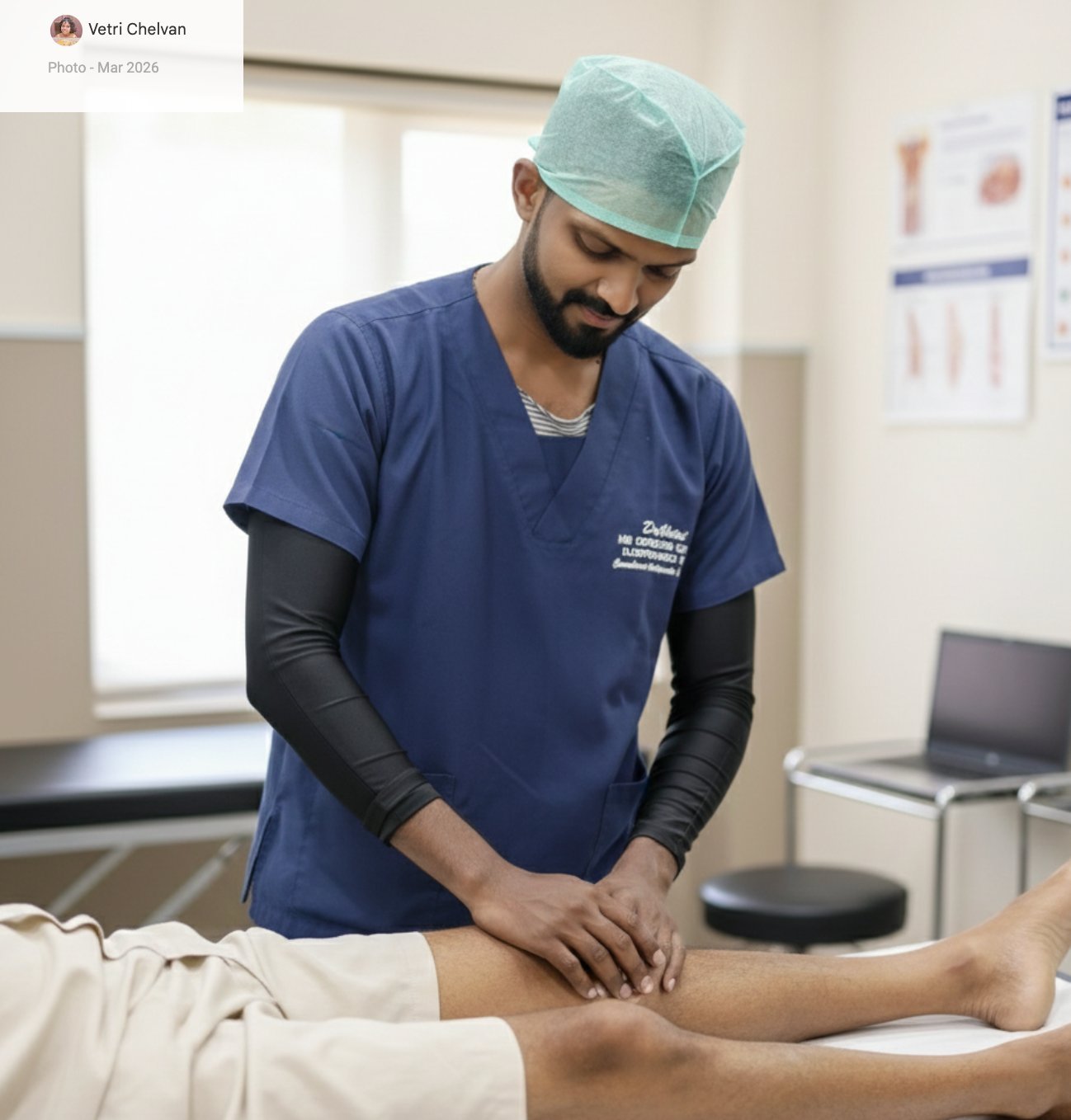
Dr. Vetri Chelvan Selvaraj
MBBS, MS (Ortho), DNB (Ortho), D Ortho, MNAMS, MRCS (Edinburgh)
Orthopaedic, Spine, Trauma and Replacement Surgeon
Frequently asked questions
Can a meniscus tear heal on its own?
Some small tears in the outer part of the meniscus, which has a better blood supply, may improve with rest and physiotherapy. Many tears, especially larger or inner ones, do not heal fully without treatment.
Is meniscus surgery done by keyhole surgery?
Yes. Most meniscus operations are arthroscopic. They are done through small cuts, using a camera and fine instruments.
How long does meniscus surgery take?
Usually about 45 to 90 minutes, depending on whether the meniscus is repaired or partly removed.
How long is the hospital stay?
Many patients go home the same day or after one night, if recovery goes smoothly.
What is the difference between repair and meniscectomy?
A repair stitches the meniscus back together and keeps the tissue. A meniscectomy removes the damaged part when a repair is not reliable.
How long is recovery after meniscus repair?
Recovery after a repair takes longer, because the tissue needs time to heal. It may be several months before you return to full activity.
When can I walk after surgery?
Walking with support often starts soon after surgery. How much weight you can put on the leg depends on whether the meniscus was repaired or partly removed.
Will I need physiotherapy after meniscus surgery?
Yes. Physiotherapy is important to restore strength, movement and confidence in the knee.
Can both menisci in the same knee be torn?
Yes. Both the medial and lateral meniscus can tear, sometimes along with a ligament injury.
Does health insurance cover meniscus tear surgery?
Most health insurance plans cover medically needed meniscus surgery, subject to policy terms, waiting periods and sum insured. See the insurance accepted at Unittas.