


Quick Navigation
Pain in the lower back is incredibly common, but not all discomfort in that area comes from the same source. Many people struggle to distinguish between ordinary back strain and something more serious involving the kidneys. Understanding kidney pain vs back pain can help you decide when it's time to seek professional advice. This blog explains the key differences in location, sensation, and accompanying signs using straightforward language.
Where Are the Kidneys Located?
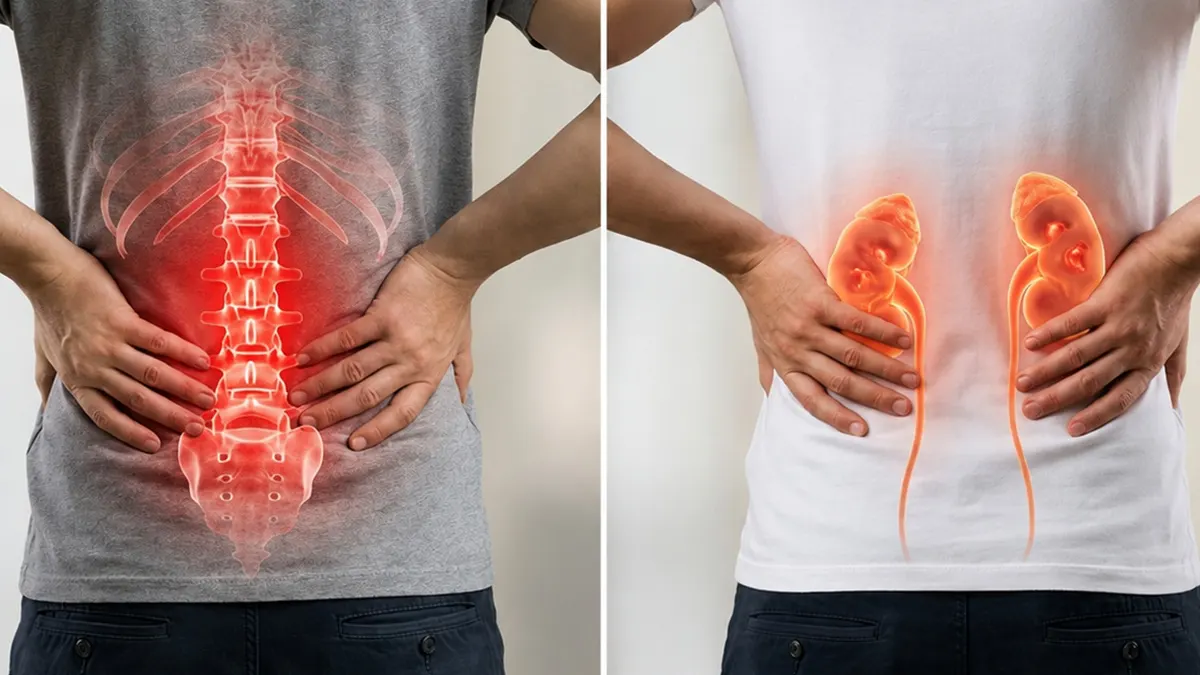
The kidneys sit high in the abdomen, just below the rib cage on either side of the spine. They rest against the back muscles, which is why pain from them can feel like it's in the back.
Kidney location on back: Typically in the flank area (sides of the mid-back), under the lower ribs.
Back pain lower kidney: Often felt lower down, around the lumbar region or across the lower spine.
Kidney pain location is usually higher and more to the sides compared to typical musculoskeletal back pain.
What Does Kidney Pain Feel Like?
Kidney-related discomfort often feels deeper inside the body. It may be:
A constant dull ache
Sharp or intense waves (especially with stones or infection)
Throbbing or pressing
It rarely changes much with posture or movement. In contrast, back pain from muscles or spine usually worsens with bending, lifting, twisting, or prolonged sitting/standing and improves with rest or position changes.
Kidney pain back pain difference often comes down to this: kidney issues feel internal and persistent, while back problems feel more surface-level and movement-related.
Key Comparison Table
| Feature | Kidney Pain | Back Pain (Musculoskeletal) |
|---|---|---|
| Typical Location | Flank (sides, under ribs), one or both sides | Lower or mid-back, along spine or muscles |
| Pain Type | Deep, dull ache or sharp waves | Achy, stabbing, or burning |
| Response to Movement | Little change; constant | Worsens with activity, improves with rest |
| Radiation | To abdomen, groin, inner thigh | To buttocks, legs, or feet (e.g., sciatica) |
| Common Triggers | No specific movement; related to urinary issues | Lifting, poor posture, injury |
Specific Descriptions and Patterns
Dull pain under the left rib cage, May point to left kidney involvement.
Abdomen and kidney pain, Kidney issues frequently spread to the front abdomen or groin.
Ache in lower back kidney area, If it's higher than typical lower back strain, consider kidneys.
Back flank pain on both sides, Suggests possible bilateral kidney involvement (e.g., infection).
Right back pain kidney area, Often linked to right kidney problems.
Kidneys hurt when sitting, Less typical for kidney pain; more common in back issues from posture.
Can kidney stones cause back pain? Yes, stones often cause severe flank pain that feels like intense back discomfort, but with added urinary symptoms.
Female kidney pain: location on back follows the same pattern as in males, though pregnancy or pelvic issues can sometimes complicate the picture.
Backache kidney pain overlap happens because the kidneys are close to back muscles, but additional clues usually clarify the source.
Associated Symptoms
Kidney pain rarely occurs alone. Look for:
Changes in urine (cloudy, bloody, foul-smelling, or reduced output)
Pain or burning during urination
Nausea, vomiting, or fever/chills
Fatigue or general malaise
Back pain more often includes:
Muscle stiffness or spasms
Tenderness when pressing the area
Pain that eases with heat, stretching, or over-the-counter pain relief
If urinary symptoms accompany the pain, it's far more likely to involve the kidneys.
When to Seek Medical Attention
Consult a doctor promptly if pain is severe, persistent, or accompanied by: Back pain that shoots down one leg with numbness or weakness is more likely a slipped disc pressing on a nerve than a kidney problem.
Fever or chills
Blood in urine
Nausea/vomiting
Swelling in legs or face
Difficulty urinating
These could indicate infection, stones, or other kidney concerns needing urgent care.
In conclusion, while back pain lower kidney area discomfort can feel similar, paying attention to location, pain quality, and extra symptoms often reveals the true cause. Accurate identification leads to better management. If you're unsure or symptoms persist, expert evaluation provides clarity and relief. Consider reaching out to specialists at Unittas Hospital for thorough assessment.
Frequently Asked Questions
Does kidney pain always affect both sides?
No, it often occurs on one side, depending on which kidney is involved.
Can dehydration cause kidney pain?
Yes, it concentrates urine and may contribute to stones or irritation leading to discomfort.
How does pregnancy affect kidney pain location?
Pressure from the growing uterus can make flank pain more noticeable, especially later in pregnancy.
Is kidney pain worse at night?
It can be, as lying down sometimes increases pressure or awareness of the ache.
Can exercise trigger kidney pain?
Intense activity might worsen stone movement or infection symptoms, unlike muscle back pain.
What tests distinguish kidney from back pain?
Urine analysis, blood tests, and imaging like ultrasound or CT help identify kidney issues.
Does kidney pain improve with painkillers?
Over-the-counter relief may help mildly, but underlying causes need specific treatment.
Are there home remedies for suspected kidney pain?
Hydration helps, but never delay professional care if symptoms suggest infection or stones.
Can kidney pain feel like period cramps in women?
Yes, radiation to the lower abdomen or groin can mimic menstrual pain.
Why does kidney pain sometimes cause vomiting?
Irritation or severe pain triggers the body's response via nerve pathways.
Is lower rib pain always kidney-related?
Not necessarily; it can stem from lungs, muscles, or other organs too.
How long should I wait before seeing a doctor for flank pain?
Seek help within a day or two if persistent, sooner with fever or blood in urine.
Can stress cause kidney-like pain?
Stress may tense muscles causing back pain, but true kidney pain usually has urinary clues.
Does diet influence kidney pain?
High salt, oxalate-rich foods, or low fluid intake can promote stones leading to pain.
Are older adults more prone to confusing these pains?
Yes, due to multiple conditions and reduced mobility affecting both areas.
Can antibiotics resolve kidney pain?
If caused by infection, yes; but stones or other issues require different approaches.
What preventive steps reduce kidney pain risk?
Stay hydrated, limit excess salt/protein, and manage conditions like diabetes or high blood pressure.
Need a Urology Consultation?
Our urology experts handle kidney, prostate & urinary conditions with latest tech.
Get Expert Care at Unittas Hospital
Our caring specialists are here to guide you through every step with safe, evidence-based care.