


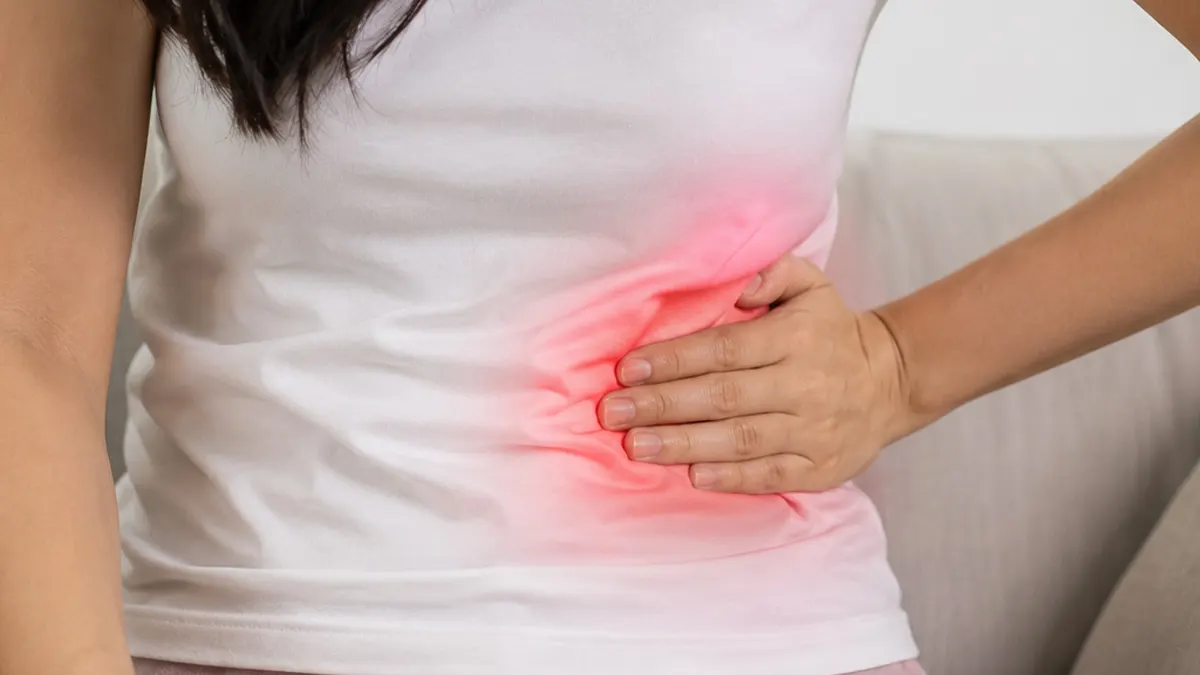
A kidney stone usually causes sharp pain in waves under the ribs on one side, spreading to the lower belly or groin. Burning when passing urine can make it feel like a UTI, and pelvic pain can feel like period cramps. The difference is the intensity and the wave pattern.
Quick Navigation
Kidney stones are one of the most painful conditions a person can experience, and in women they are also one of the most commonly misread. The symptoms overlap almost perfectly with a urine infection and, when the pain settles low in the pelvis, with period cramps.
That overlap is the reason diagnosis is sometimes delayed. Knowing which features genuinely separate a stone from the alternatives is the most useful thing you can take from this page.
Why Stones Are Easy to Miss in Women
Two things work against an early diagnosis. First, the pain from a stone moving down the ureter often radiates into the lower abdomen and groin, which is exactly where menstrual pain sits. Second, a stone irritating the bladder causes burning and urgency, which is exactly how a urine infection presents.
Because both alternatives are so common, the natural assumption is that it is one of those. Many women describe waiting several days, treating what they believed was a UTI, before the pain escalated to the point where they sought help.
The Common Symptoms
Symptoms usually begin when the stone starts to move out of the kidney into the narrow tube leading to the bladder. Until then, many stones cause nothing at all.
- Flank pain. Sharp or cramping pain on one side of the back, below the ribs, which may travel down toward the lower abdomen and groin.
- Pain in waves. It builds, peaks, then eases, often over twenty to sixty minutes, then returns. This wave pattern is the single most distinctive feature.
- Burning when passing urine. Common once the stone reaches the lower ureter, and the main reason it gets mistaken for infection.
- Frequent urge with little output. Feeling you need to go constantly but passing only small amounts.
- Changes in your urine. Pink, red or brown from blood, or cloudy with a strong smell. Crystals in urine on a lab report can be an early clue before a stone forms.
- Nausea and vomiting. Driven by the intensity of the pain rather than by anything in the stomach.
- Lower abdominal or pelvic pain. More often reported by women, and the symptom most often attributed to periods.
Patients frequently describe stone pain as among the most severe they have known. That description is subjective, but it is consistent enough to be worth taking seriously when someone uses it.
Stone, UTI or Period Pain?
No table replaces a proper assessment, but these are the features that most reliably point one way or the other.
| What You Notice | Points Toward a Stone | Points Toward UTI or Period Pain |
|---|---|---|
| Where it starts | Back or flank, below the ribs, then travelling down | Bladder area or central lower abdomen |
| Pattern | Severe waves that build and ease over twenty to sixty minutes | Steady, moderate, more constant |
| Position | No position relieves it, often restless and unable to settle | Often eased by rest, heat or lying down |
| Urine | Visible or microscopic blood, sometimes gritty | Cloudy, strong smelling, urgency without blood |
| Timing | Unrelated to your cycle | Period pain follows a predictable cyclical pattern |
| Fever | Suggests an infected blockage, needs urgent care | Low-grade fever possible with a kidney infection |
The Clearest Distinction
A urine infection tends to produce steady, moderate discomfort concentrated around the bladder. A stone produces severe pain that comes in waves, usually starts in the back or flank, and is often so intense that lying still does not help. If you cannot get comfortable in any position, that points away from a simple infection.
When to Get Help the Same Day
Do Not Wait
Seek urgent care if you have a fever or chills alongside the pain, cannot keep fluids down, are passing very little or no urine, see a large amount of blood, or the pain is unmanageable. Fever with stone pain can mean an infected, obstructed kidney, which needs treatment within hours rather than days.
Pregnancy changes the calculation too. Stones are more common in pregnancy because of changes in urine flow, and pain should always be reported rather than managed at home.
How It Gets Confirmed
Diagnosis is usually quick. A routine urine test looks for blood and crystals, a urine culture rules out or confirms infection, and an ultrasound or CT scan locates the stone and measures it.
That measurement matters for what happens next. Unlike gallstones, kidney stone size maps quite directly onto the treatment plan, and what size of kidney stone requires surgery covers the thresholds in detail.
If the tests point to infection rather than a stone, pus cells in urine explains what those results mean and what follows.
Why Stones Form
Stones form when the urine becomes concentrated enough for minerals to crystallise and clump together. The main contributors are:
- Not drinking enough water through the day, particularly in a hot climate
- A diet high in salt, animal protein or sugary drinks
- Being overweight, or certain metabolic conditions
- Repeated urine infections, which favour a particular stone type
- A previous stone, which is the strongest single predictor of another
- Pregnancy-related changes in urine flow
Lowering Your Risk
Prevention is unusually effective for kidney stones, and it is mostly about fluid.
- Drink enough water that your urine stays pale through the day
- Reduce added salt and heavily processed food
- Keep a balanced diet with plenty of fruit and vegetables
- Do not cut dietary calcium without medical advice, as this can make some stone types worse
- If you have had a stone before, ask for it to be analysed so prevention can be targeted
Frequently Asked Questions
Can kidney stones feel like bad period cramps?
Yes. When a stone reaches the lower ureter the pain is felt low in the pelvis, which is easily confused with menstrual pain. The wave pattern and the severity are the distinguishing features.
Do kidney stones always hurt?
No. Small stones sitting in the kidney often cause nothing at all and are found incidentally. Pain usually begins only when a stone starts to move.
How can I tell a stone from a UTI at home?
You cannot do so reliably, which is the point. Severe pain in waves starting in the back leans toward a stone, while steady bladder discomfort leans toward infection. Both need testing.
Will there always be visible blood?
No. Blood is often present only on a lab test rather than visible. Absence of visible blood does not rule out a stone.
Does pregnancy make stones more likely?
It can, because of changes in urine flow and mineral handling. Pain in pregnancy should always be reported rather than managed at home.
What if the pain is mild?
Mild pain is worth monitoring with good hydration. If it escalates, persists, or is joined by fever or vomiting, it needs assessment.
Are kidney stones becoming more common in women?
The gap between men and women has narrowed over time. Diagnosis in women is sometimes delayed because the symptoms overlap with more common conditions.
Can my diet trigger an episode?
Yes. Low fluid intake combined with high salt or sugary drinks concentrates urine and favours crystal formation.
How long does an attack last?
Painful episodes come and go over hours or days until the stone passes or is treated. The absence of pain for a few hours does not mean it has passed.
Is it normal to get more than one?
Unfortunately yes. Recurrence is common, which is why prevention after a first stone is worth taking seriously.
Can painkillers manage it at home?
Simple analgesia may ease milder discomfort, but severe pain needs medical assessment, both for relief and to rule out obstruction.
Which tests confirm a stone?
Urine testing plus imaging, usually an ultrasound or a low-dose CT scan, which also measures the stone and guides treatment.
Suspected kidney stone?
Our urology team offers same-day scans, urine testing and stone treatment.