


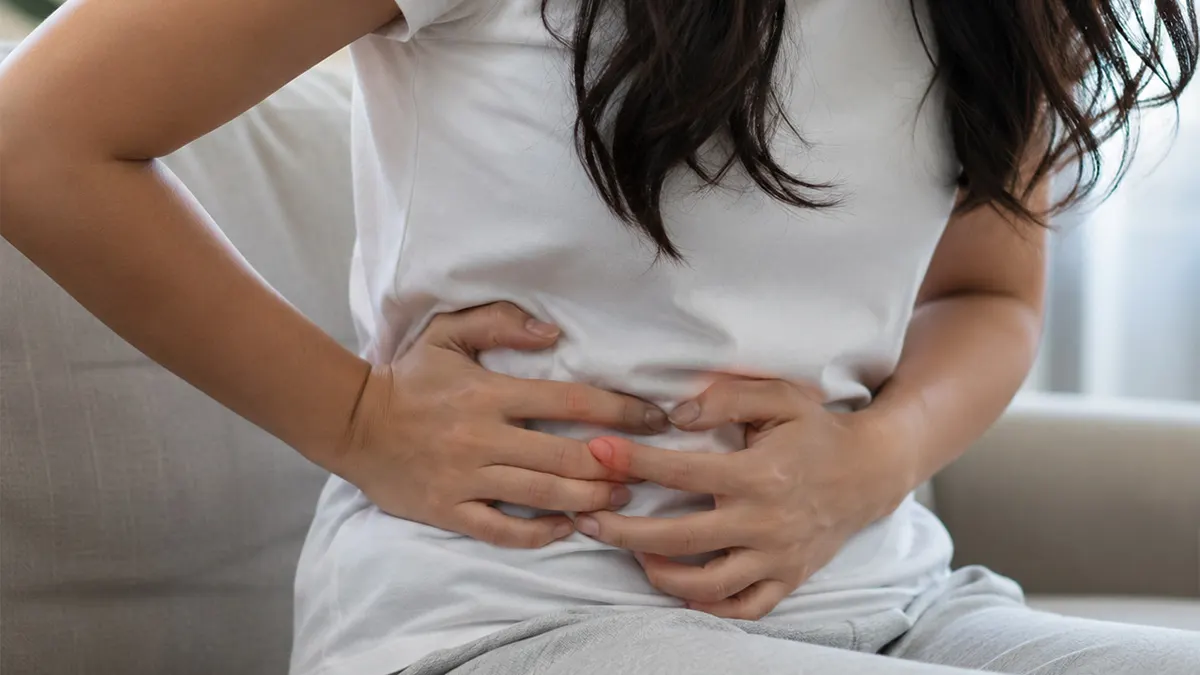
Pain in the upper right usually points to the gallbladder or liver, and often follows a fatty meal. Pain in the lower right points to the appendix, right ovary or bowel. Sudden severe pain, or pain with fever or vomiting, needs same-day assessment rather than watchful waiting.
Quick Navigation
Right-sided abdominal pain is one of the most common reasons women end up searching at midnight, and one of the hardest to self-diagnose. The right side of your abdomen holds the liver, gallbladder, part of the bowel, the appendix, the right kidney and the right ovary. Any of them can be the source.
The most useful clue is not how badly it hurts. It is where exactly it hurts, and whether the pain sits high under the ribs or low near the hip bone. That single distinction narrows the list dramatically.
Why Location Narrows It Down So Quickly
Your abdomen is usually divided into quadrants, and each one sits over a different set of organs. On the right side, the split between upper and lower is the one that matters most, because the organs above and below that line produce quite different patterns of pain.
Upper right pain tends to be linked to the digestive organs that process fat. Lower right pain tends to be linked to the appendix, the bowel and the reproductive organs. Pain that travels between the two, or shifts over hours, is its own important signal.
Pain in the Upper Right, Under the Ribs
This area sits over the liver and gallbladder. The classic pattern is pain that builds over an hour or two after a rich or fried meal, sometimes spreading to the back or the right shoulder blade.
- Gallstones. Severe, wave-like pain after fatty food, often with nausea. The size of the stone matters less than you might expect, and what your stone size actually tells you is worth understanding if you have had a scan.
- Gallbladder inflammation. Similar pain that does not settle, usually with fever and tenderness when the area is pressed.
- Liver-related causes. A duller, more constant ache rather than sharp waves. Often found alongside tiredness rather than on its own, and sometimes picked up through liver inflammation investigations.
- Acid and stomach causes. Burning that rises toward the chest, worse lying down, often better with food changes. Our guide to gastric issues covers the pattern.
Pain in the Lower Right, Near the Hip Bone
This is the quadrant that causes the most worry, and with good reason. It holds the appendix and the right ovary, and both can produce pain that escalates.
- Appendicitis. Pain that starts vaguely around the navel and then settles firmly in the lower right over several hours. Where appendicitis pain starts and moves to explains the migration in detail, because that shift is the most reliable clue.
- Ovarian causes. Cysts, ovulation pain in the middle of your cycle, or the sudden severe pain of a twisted ovary, which is an emergency.
- Fibroids. Pressure and heaviness rather than sharp pain, sometimes with bladder or bowel symptoms. Common gynaecological problems covers where fibroids fit.
- Bowel causes. Trapped wind, constipation or inflammation. Usually comes and goes and moves around, unlike appendicitis which localises and stays.
- Urinary causes. A kidney stone moving down the right side, or infection. Kidney stone symptoms in women covers why this is so often mistaken for a UTI, and pus cells in urine explains what the test result means.
Pain Map by Location
Use this as a starting point for the conversation with your doctor, not as a diagnosis.
| Area of Pain | Organs in That Area | Typical Pattern |
|---|---|---|
| Upper right, under the ribs | Gallbladder, liver, bile ducts | Builds after fatty meals, may spread to the back or right shoulder blade |
| Mid right, toward the flank | Right kidney, ureter, muscles | Sharp waves under the ribs spreading to the groin, or a dull muscular ache |
| Lower right, near the hip bone | Appendix, right ovary, bowel | Sharp, localised, worse with movement or when pressed |
| Central then moving right | Appendix | Vague ache near the navel that settles in the lower right over hours |
| Lower right with pelvic ache | Right ovary, uterus | Cyclical, may relate to your period or ovulation |
What Comes With the Pain
The accompanying symptoms often tell you more than the pain itself. Note whether you also have:
- Fever or chills, which point toward infection or inflammation
- Nausea and vomiting, especially if you cannot keep fluids down
- A change in bowel habit, or an inability to pass wind at all
- Pain or burning when passing urine, or blood in the urine
- Bleeding between periods, or pain during sex
- Pain that clearly worsens with movement, coughing or pressing
Worth Tracking
Before your appointment, note when the pain started, what you were doing, whether it comes in waves or stays constant, and what makes it better or worse. That short history often shortens the path to a diagnosis more than any single test.
When to Get Help Urgently
Some patterns should not wait until morning. Go to emergency care if you have:
Do Not Wait
Sudden severe pain that stops you moving normally. Pain with a fever above 38 degrees. Persistent vomiting with an inability to keep fluids down. A rigid or board-like abdomen. Pain with fainting or a racing heart. Pain in early pregnancy. Or lower right pain that has been steadily worsening for more than six hours.
A rigid abdomen with severe pain can indicate a perforation in the bowel wall, which is a surgical emergency where hours matter.
What You Can Reasonably Do at Home
For mild, familiar discomfort with none of the warning signs above, simple measures are reasonable while you arrange a review:
- Rest and a warm compress over the sore area
- Light, easily digested food and plenty of water
- Avoiding heavy lifting or strenuous exercise until it settles
- Keeping a short note of when the pain appears and what preceded it
Avoid strong painkillers before you have been assessed, since masking the pain can make it harder to work out what is happening.
Frequently Asked Questions
Can ovulation cause pain on just the right side?
Yes. Mittelschmerz is ovulation pain felt on the side that released an egg that month, so it can alternate between cycles. It usually lasts hours rather than days.
How do I tell muscular pain from something internal?
Muscular pain is usually reproducible by a specific movement and eases with rest and stretching. Internal pain tends to be less positional and often comes with nausea, fever or changes in appetite.
Is right-sided pain in pregnancy normal?
Mild stretching sensations are common as ligaments stretch. Any significant, persistent or one-sided pain in pregnancy should be assessed promptly, as the appendix also sits higher during pregnancy.
Can constipation cause sharp right-sided pain?
Yes. Trapped wind or stool in the ascending colon can produce surprisingly sharp discomfort that moves around and eases after passing wind.
Does endometriosis cause right-sided pain?
It can, particularly if tissue affects the right ovary or nearby pelvic structures. The pain is often cyclical and may worsen around your period.
Can a urine infection present as abdominal pain?
Yes, especially if the right kidney or ureter is involved. Burning when passing urine and needing to go frequently are the usual accompanying clues.
How long should I wait before seeing someone?
Any pain lasting more than a few hours that is worsening, or any pain with fever, vomiting or fainting, should be assessed the same day rather than watched.
Does stress make abdominal pain worse?
Stress heightens pain perception and affects gut motility, so it can intensify symptoms. It does not cause the structural problems listed here, so it should not be assumed as the explanation.
Should I avoid certain foods with recurring right-sided pain?
If the pain follows rich or fried meals, reducing them while you await assessment is sensible and can help identify a gallbladder pattern. A short food diary is useful.
Can hormonal changes through the month affect the pain?
Yes. Shifts in oestrogen and progesterone influence ovarian cysts, bowel sensitivity and fluid retention, so cyclical patterns are meaningful information.
Is pain after eating always gallbladder related?
It is a common pattern for gallbladder problems, particularly after fatty food, but stomach and bowel causes produce post-meal pain too. Timing and location together matter more than either alone.
Can I have appendicitis without the classic migrating pain?
Yes. Not everyone follows the textbook pattern, particularly children, older adults and pregnant women. Persistent, worsening lower right pain deserves assessment regardless of how it started.
Persistent abdominal pain?
Our gynaecology and general surgery teams assess right-sided pain with same-day scans.