


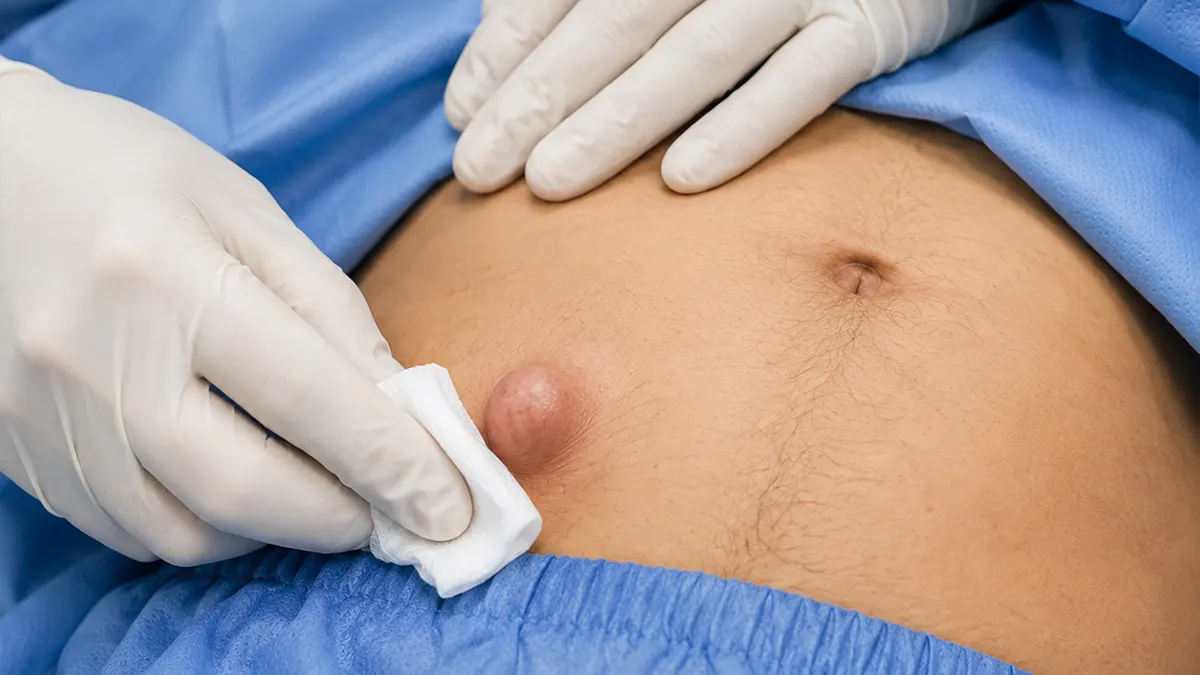
Most hernias start as a soft bulge you can push back in, together with a dull dragging ache that gets worse when you stand, lift or cough. The bulge often disappears when you lie down. If it turns firm, red or painful and will not go back in, that is an emergency.
Quick Navigation
A hernia is one of the few conditions where your own hands and eyes give you most of the information you need. The difficulty is knowing which sensations matter, because the early signs are vague enough that most people ignore them for months.
What a Hernia Actually Is
A hernia happens when part of an organ or fatty tissue pushes through a weak point in the muscle wall that is meant to hold it in place. Most appear in the abdomen or groin. The weak spot may have been there since birth, or it may have developed over years of pressure from lifting, coughing or straining.
The bulge itself is not really the problem. The problem is what happens if the tissue pushing through gets trapped.
What a Hernia Feels Like Before You Can See It
Many people notice the feeling before they notice the lump. Early signs are easy to dismiss because they come and go:
- A heavy or dragging sensation low in the abdomen or groin, worse by the end of the day
- A dull ache that appears when you stand for a long time and eases when you sit or lie down
- A feeling of pressure or fullness at one specific spot, always the same spot
- A brief sharp twinge when you lift something, cough, sneeze or strain on the toilet
- Discomfort that improves overnight and returns the next day
The pattern matters more than the intensity. A hernia is usually worse with activity and better with rest, and it keeps returning to the same place. That repetition is what separates it from a pulled muscle, which tends to settle over a week or two and does not produce a lump.
Symptoms by Type of Hernia
Where you feel it tells you which type you are likely dealing with.
| Type | Where You Feel It | What You Might See or Feel | When It Stands Out |
|---|---|---|---|
| Inguinal (groin) | One or both sides of the pubic bone | Soft bulge in the groin, sometimes extending into the scrotum, with aching or burning around it | Standing, coughing, lifting or straining |
| Umbilical (navel) | At or just beside the belly button | A rounded swelling that softens when you lie flat | After eating, during activity, or when crying in babies |
| Femoral (upper thigh) | The crease at the top of the inner thigh | A small firm bulge, easy to miss. More common in women | Standing or walking for long periods |
| Incisional (old scar) | Along a previous surgical scar | A lump that appears months or years after the operation | With movement, coughing or pressure on the scar |
| Hiatus (upper stomach) | No visible bulge at all | Heartburn, a sour taste, discomfort when swallowing | After meals and at night |
Hiatus hernia is the one people miss, because there is nothing to see or feel from the outside. It shows up as reflux and heartburn rather than a lump, and is usually found during tests for those symptoms. Our guide to gastric issues and reflux covers that pattern.
What Makes the Symptoms Worse
Anything that raises pressure inside the abdomen will make a hernia more noticeable: lifting, straining on the toilet, a persistent cough, prolonged standing, or a heavy day on your feet. This is also why the bulge tends to be most obvious in the evening and flattest first thing in the morning.
If your hernia is being aggravated by day-to-day habits, our guide on lowering your risk of a hernia covers lifting technique, managing a chronic cough and the loads worth avoiding.
When It Becomes an Emergency
Most hernias are reducible, which means the bulge can be gently pushed back in. Sometimes the tissue gets stuck, and the blood supply to it can be cut off. That is a surgical emergency and it develops over hours, not days.
Go to Emergency Care If the Bulge
Becomes firm, tense or will not go back in when it used to. Turns red, purple or darker than the surrounding skin. Becomes suddenly and severely painful. Or comes with vomiting, fever, or a complete stop in passing wind or stool. That last combination suggests the bowel is obstructed. Do not wait to see whether it settles overnight.
A trapped hernia that is left can progress to bowel damage and perforation, which is why the timeline here is hours rather than days.
Why Hernias Do Not Resolve on Their Own
A hernia is a physical gap in the muscle wall. Rest, exercise and support belts can ease the symptoms, but they do not close the gap, which is why most hernias slowly enlarge over months and years. Umbilical hernias in babies are the exception, as many close by themselves in the first few years.
That does not mean every hernia needs immediate surgery. Small, painless hernias are sometimes watched rather than operated on. It does mean that a hernia which is growing, aching or catching deserves an assessment rather than a wait.
If you have found a bulge or have had that dragging ache for a while, laparoscopic hernia repair at Unittas Hospital is a day-care procedure for most people, and an assessment will tell you whether you need one at all.
Frequently Asked Questions
Can a hernia appear suddenly?
Yes. Some people feel a distinct give while lifting and see a bulge the same day. Others develop one so gradually they cannot say when it started.
Are all hernias painful?
No. Many produce only a visible lump or a vague heaviness. Absence of pain does not mean absence of a hernia, and it does not rule out one that could become trapped later.
How do I tell a hernia from a pulled muscle?
A pulled muscle usually settles within a week or two and produces no lump. A hernia produces a bulge that comes and goes with position, keeps returning to the same spot, and does not resolve with rest.
Is it safe to push a hernia back in myself?
Gently, yes, if it goes back easily and does not hurt. Never force it. If it suddenly will not reduce, that is a reason for emergency care, not more pressure.
Can women get groin hernias?
Yes. Inguinal hernias are less common in women than men, but femoral hernias are more common in women, and they carry a higher risk of getting trapped.
Do hernias always get bigger?
Most enlarge slowly because the pressure that created them continues. The rate varies widely, and some stay stable for years.
Can a hernia cause nausea or constipation?
It can, if bowel is involved and becoming obstructed. Nausea, vomiting or an inability to pass wind alongside a painful bulge needs urgent assessment.
Are there hernias you cannot see from outside?
Yes. Hiatus hernias sit inside the chest cavity and are diagnosed through symptoms and tests rather than a visible lump.
Does a hernia belt or truss fix the problem?
It may make the bulge less uncomfortable during the day, but it does not repair the muscle gap and it does not prevent the hernia from becoming trapped.
Can coughing cause a hernia?
Repeated coughing raises abdominal pressure and can weaken the wall over time. It is more often the thing that reveals an existing weak spot than the sole cause.
Do hernias run in families?
There can be an inherited tendency in connective tissue strength, so it is worth mentioning family history to your doctor.
Can losing weight improve an existing hernia?
Losing weight reduces the pressure pushing against the weak spot, which often eases symptoms and may slow growth. It does not close the gap.
Found a bulge or a dragging ache?
Our general surgery team assesses hernias and performs keyhole repair as day-care surgery.