


Quick Navigation
- What Is Cirrhosis of the Liver?
- What Causes Cirrhosis? The Three Most Common Causes
- What Other Conditions Can Scar the Liver?
- What Are the Stages of Cirrhosis?
- What Symptoms Should Make You Think of Liver Trouble?
- How Is Cirrhosis Diagnosed?
- Why Finding the Cause Matters
- How to Protect Your Liver
- Frequently Asked Questions
Cirrhosis of the liver is heavy, permanent scarring that builds up after years of ongoing liver injury. The most common causes are long-term heavy alcohol use, fatty liver disease linked to weight and diabetes, and chronic hepatitis B or C. Existing scar tissue does not go away, but treating the cause can stop cirrhosis getting worse.
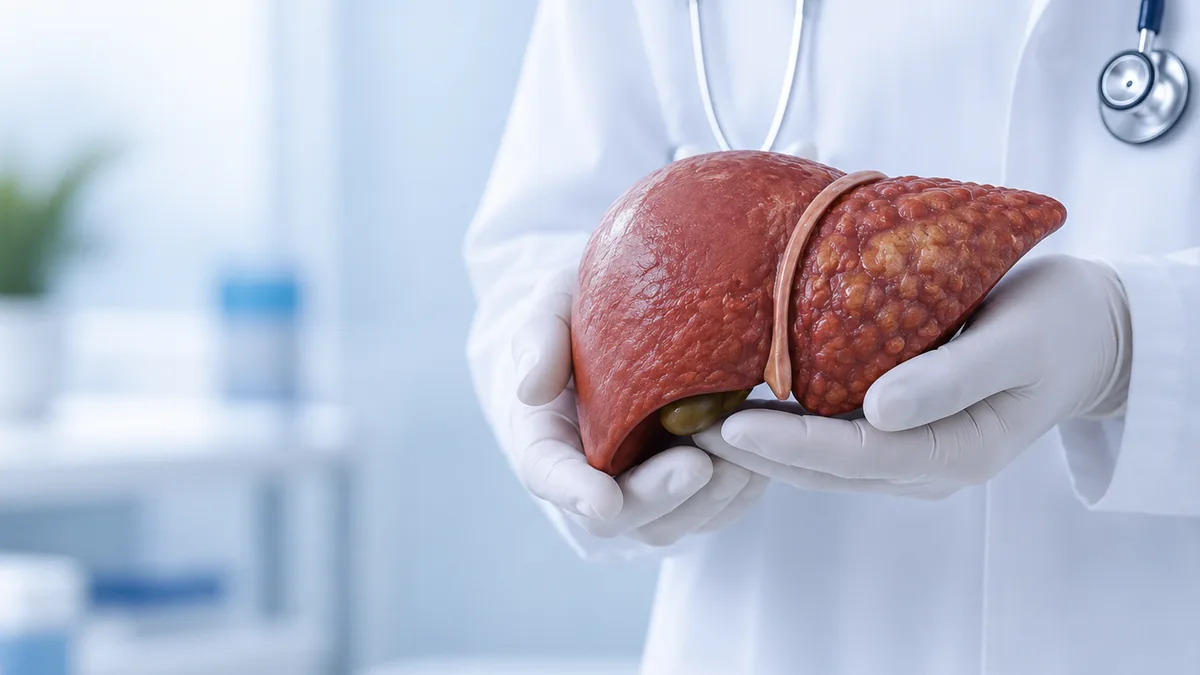
Cirrhosis sounds dramatic, and in many ways it is. It means the liver has become heavily scarred after years of damage. Scar tissue replaces healthy cells, and the liver slowly finds it harder to do its jobs: cleaning the blood, making proteins, storing energy and helping digest fat.
The good news is that the main causes of liver cirrhosis are well understood, several can be treated, and the damage takes years to build. That gives you time to act, if the problem is picked up. This guide explains what causes cirrhosis, how it moves through stages, and how to protect your liver.
Key Takeaways
- Cirrhosis is the end result of years of liver injury, not a sudden illness. Long-term inflammation comes first, then fibrosis, then cirrhosis.
- The three biggest causes are heavy alcohol use over many years, fatty liver disease (MASLD) tied to weight, diabetes and cholesterol, and chronic hepatitis B or C.
- Scarring that has formed is largely permanent, but treating the cause can halt progression and let the remaining healthy liver work better.
- Early (compensated) cirrhosis often causes no symptoms. Jaundice, a swollen abdomen, confusion or vomiting blood mean the liver is struggling and need urgent care.
- A liver function test and an ultrasound or FibroScan can pick up damage before symptoms appear, especially if you have risk factors.
What Is Cirrhosis of the Liver?
The liver is very good at repairing itself. Each time it is injured, by alcohol, fat, a virus or an immune attack, it heals with a little scar tissue. If the injury keeps happening year after year, the scars join up and stiffen the whole organ. That advanced, widespread scarring is cirrhosis.
Cirrhosis does not appear overnight. First there is usually a long phase of liver inflammation, which has its own warning signs but may cause few or no symptoms. Catching the problem then is far better than finding it once scarring is advanced.
What Causes Cirrhosis? The Three Most Common Causes
Long-term heavy alcohol use
Alcohol remains one of the biggest causes. Drinking heavily for many years inflames and damages liver cells, a condition doctors call alcohol-related liver disease, and scar tissue slowly builds up. Not everyone who drinks heavily gets cirrhosis, but the risk rises with the amount and the number of years.
This is not about blame. Many people who drink heavily do so for reasons that deserve support, not judgement. Cutting down or stopping at any stage helps. If you find it hard to cut down, say so at your appointment. Help is available.
Fatty liver disease (MASLD)
MASLD (metabolic dysfunction-associated steatotic liver disease), the new name for non-alcoholic fatty liver disease, is now one of the leading causes in many countries. Fat builds up in the liver in people who are overweight or have type 2 diabetes, high blood pressure or raised cholesterol. Fat alone is fairly harmless. When it triggers inflammation (a stage called MASH), it can progress to scarring and cirrhosis. Steady weight loss through diet and activity is the main treatment, and structured nutrition and weight management support makes it easier to keep up.
Chronic viral hepatitis (B and C)
Hepatitis B and C can quietly inflame the liver for decades. Hepatitis C is now often curable with a course of modern antiviral tablets; hepatitis B can be controlled with treatment and prevented by a vaccine. Untreated, both remain major causes of cirrhosis worldwide. So testing matters if you may have been exposed or a family member has hepatitis B.
What Other Conditions Can Scar the Liver?
Less common causes include:
- Autoimmune conditions, where the immune system attacks the liver (autoimmune hepatitis) or the bile ducts (primary biliary or sclerosing cholangitis)
- Inherited disorders such as haemochromatosis (iron overload), Wilson's disease (copper overload) or alpha-1 antitrypsin deficiency
- Long-term blockage or damage to the bile ducts
- Long exposure to certain medicines or industrial chemicals
- Long-standing heart failure, when blood backs up into the liver
Often more than one factor is at work, such as alcohol plus fatty liver, and the combination speeds up damage. In a few people no cause is found even after full testing (cryptogenic cirrhosis); many of these are now thought to be missed fatty liver disease.
What Are the Stages of Cirrhosis?
Doctors describe liver damage as a series of stages, ending in compensated and decompensated cirrhosis. Knowing where you are explains why some people with cirrhosis feel well and others are very unwell.
| Stage | What is happening in the liver | What you might notice |
|---|---|---|
| Healthy liver | Normal tissue, full function | Nothing |
| Fatty liver or ongoing inflammation | Fat build-up or ongoing inflammation from alcohol, a virus or an immune attack | Usually nothing; sometimes tiredness or mildly abnormal tests |
| Fibrosis | Early scar tissue; the liver still works and damage can partly reverse if the cause is removed | Often nothing; may show on FibroScan or blood tests |
| Compensated cirrhosis | Widespread scarring, but enough healthy tissue remains to keep it working | Often none; tiredness, mild swelling or spider-like veins on the skin in some |
| Decompensated cirrhosis | The liver can no longer keep up and pressure rises in the veins around it (portal hypertension) | Yellow eyes or skin (jaundice), swollen abdomen and legs, confusion, easy bruising, vomiting blood or black stools |
Specialists also grade severity with scores such as Child-Pugh, based on blood results and symptoms. These guide treatment, including transplant assessment in advanced disease. The point for you is simpler: the earlier the stage, the more that can still be done.
What Symptoms Should Make You Think of Liver Trouble?
Early cirrhosis is often silent and found by chance on a blood test or scan done for another reason. As it advances, the symptoms of liver cirrhosis become easier to spot. You may notice:
- Tiredness and weakness
- Loss of appetite, nausea or weight loss
- Itching
- Spider-like red blood vessels on the chest and face
- Easy bruising or bleeding
- Swollen legs and ankles, or a swollen abdomen from fluid (ascites)
- Yellowing of the eyes or skin (jaundice), dark urine or pale stools
- Confusion, drowsiness or personality change (hepatic encephalopathy)
Get emergency care now if
You vomit blood, pass black tarry stools, become confused or unusually drowsy, develop a rapidly swelling abdomen with fever or pain, or your eyes and skin turn yellow quickly. These mean the liver is failing to cope or a vein has started to bleed. They need hospital treatment the same day.
For milder but ongoing problems, such as unexplained tiredness, ankle swelling, itching or abnormal liver tests, see a doctor within a week or two. Do not wait for the next annual check-up.
How Is Cirrhosis Diagnosed?
The work-up usually combines:
- Liver function tests (LFTs): a blood panel measuring liver enzymes, bilirubin and proteins such as albumin. LFTs can be normal in early cirrhosis
- Tests for the cause: hepatitis B and C markers, blood sugar and lipids, iron studies and autoimmune antibodies
- Ultrasound of the abdomen, showing the liver's size and texture, any fluid and the spleen
- FibroScan, a painless scan that measures liver stiffness, which rises as scarring increases
- Occasionally a liver biopsy, or an endoscopy to check for swollen veins
If you have risk factors and no symptoms, an LFT is a sensible first step and is usually part of a master health check-up. If the results are abnormal or you have a known liver condition, a FibroScan shows the degree of scarring without a biopsy.
Why Finding the Cause Matters
The cause decides the treatment. Stopping alcohol, treating hepatitis B or C, losing weight and controlling diabetes, or managing an inherited condition can each slow further damage. In some people liver function improves. Even with advanced scarring, treating the cause makes a real difference to how you feel and to the risk of complications.
Cirrhosis care also means monitoring: regular blood tests, ultrasound checks for liver cancer (more common in a scarred liver) and screening for swollen veins in the food pipe. A liver specialist in a gastroenterology department usually coordinates this.
How to Protect Your Liver
Most cirrhosis is linked to things you can influence:
- Keep alcohol low, and if you already have a liver condition, the safest amount is none
- Aim for a healthy weight and stay active; even modest weight loss reduces liver fat
- Manage diabetes, blood pressure and cholesterol
- Get the hepatitis B vaccine if you are not already immune
- Get tested for hepatitis B and C if you may have been exposed, and treat it if positive
- Use medicines, including painkillers and herbal or 'liver tonic' products, only as directed; some harm the liver
- Have regular check-ups if you already have a liver problem
None of this requires perfection. Each step removes a source of injury and gives the liver a chance to steady itself.
Cirrhosis of the liver is the end result of years of injury, and the earlier the cause is found and managed, the better the outlook. Scars that have formed will not vanish, but the damage can be stopped. If you have risk factors, unexplained tiredness or swelling, or abnormal liver tests, book a liver assessment with a gastroenterologist rather than waiting for symptoms.
Frequently Asked Questions
Can you get cirrhosis if you only drink socially?
Occasional social drinking is unlikely to cause cirrhosis. The risk rises with regular heavy intake over many years, and it rises faster if you also have fatty liver or viral hepatitis.
Is fatty liver the same as cirrhosis?
No. Fatty liver is an early stage that can often be reversed. Only some people with fatty liver go on to develop inflammation, then scarring, then cirrhosis.
Is cirrhosis reversible?
The scar tissue that has already formed is largely permanent. But removing the cause can stop the scarring from getting worse, and the remaining healthy liver can work better, so people often feel and do better.
Can hepatitis A cause cirrhosis?
No. Hepatitis A is a short-term infection and does not lead to chronic liver disease or cirrhosis. Hepatitis B and C are the chronic types that can.
Does everyone with hepatitis C develop cirrhosis?
No. Many people clear the virus or live for years without major scarring, especially when treated early with modern antiviral tablets.
Can paracetamol cause cirrhosis?
Normal, occasional use is safe. An overdose or very long-term high doses can damage the liver, but this is a rare route to cirrhosis compared with alcohol, fatty liver and hepatitis.
Can losing weight reverse fatty liver before it becomes cirrhosis?
Yes. Losing around 7 to 10 percent of body weight greatly reduces liver fat and inflammation in many people. That is why weight management is central to treating fatty liver.
Does coffee protect against cirrhosis?
Some studies link regular coffee drinking with a lower risk of liver scarring, but coffee is not a substitute for dealing with the actual cause.
How long does it take for cirrhosis to develop?
Usually years to decades of ongoing injury. The timeline varies with the cause, how many causes overlap, and the person.
Is cirrhosis hereditary?
Most cases are not. A few inherited conditions, such as haemochromatosis or Wilson's disease, can lead to cirrhosis, so family history is part of the check-up.
Abnormal liver tests or known risk factors?
A liver assessment with a gastroenterologist can find the cause early, while there is still time to stop the damage.
Give your liver a check before it complains
Cirrhosis stays quiet until it is advanced. If you drink regularly, carry extra weight, have diabetes, or have ever had hepatitis, book a liver assessment at Unittas Hospital.