


Quick Navigation
- What Are the Main Types of Thyroid Conditions?
- Hypothyroidism (Underactive Thyroid)
- Hyperthyroidism (Overactive Thyroid)
- Goitre and Thyroid Nodules
- Thyroiditis, Including Hashimoto's
- Thyroid Cancer: A Brief Overview
- How Are Thyroid Conditions Diagnosed?
- Why the Exact Type Matters, and When to See a Doctor
- Frequently Asked Questions
The main types of thyroid conditions are hypothyroidism (too little hormone), hyperthyroidism (too much), goitre (an enlarged gland), thyroid nodules (lumps, mostly benign), thyroiditis (inflammation, including Hashimoto's) and, less commonly, thyroid cancer. Symptoms overlap with many other problems, so a thyroid function test and a doctor's assessment are needed to confirm which, if any, you have.
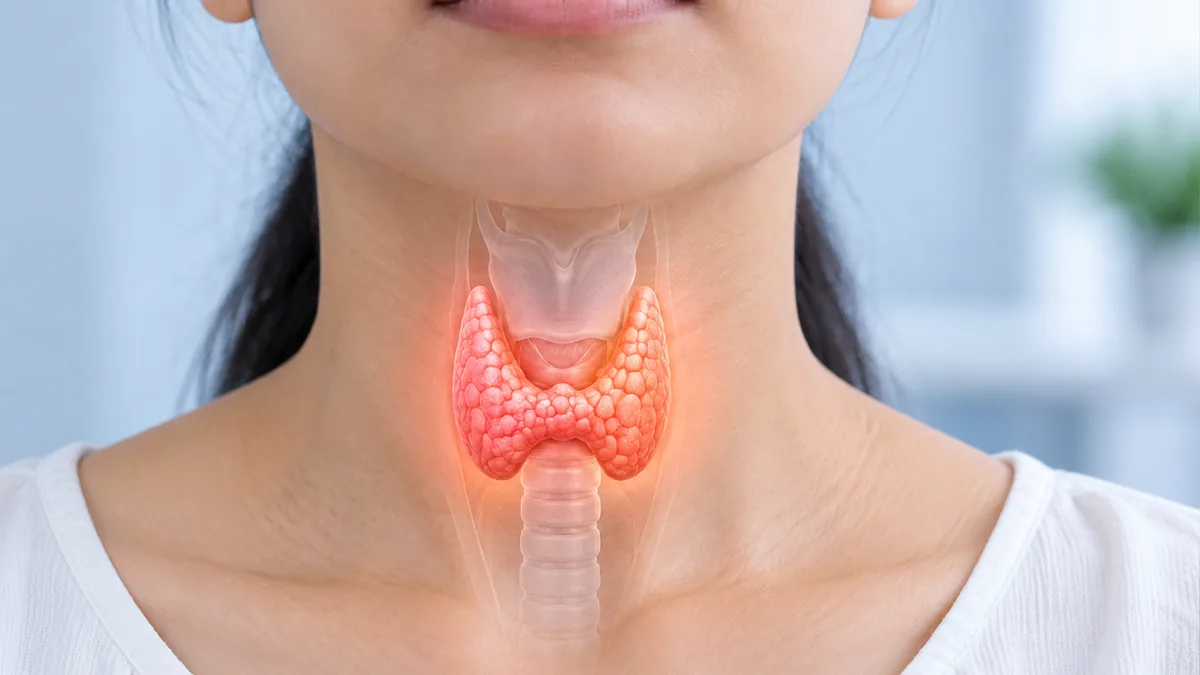
Your thyroid is a small, butterfly-shaped gland at the front of the neck that quietly sets the pace of your metabolism. When it works well, you never notice it. When it does not, the effects can show up in your energy, weight, mood, heart rate, periods and skin. That is also why thyroid problems are so often blamed for symptoms that turn out to have other causes.
This guide walks through the main types of thyroid conditions, what each one does, and how doctors tell them apart. One theme runs through all of it: symptoms alone cannot diagnose a thyroid problem. A simple blood test can.
Key Takeaways
- Thyroid conditions fall into two broad groups: hormone problems (underactive or overactive) and structural problems (goitre, nodules, cancer). Thyroiditis can cause both.
- Hypothyroidism slows the body down (tiredness, weight gain, feeling cold); hyperthyroidism speeds it up (anxiety, weight loss, fast heartbeat). Hashimoto's and Graves' disease are the usual autoimmune causes.
- Most thyroid nodules are benign and simply monitored, but a hard, growing or painless lump in the neck needs an ultrasound and sometimes a needle test.
- Thyroid cancer is uncommon and usually very treatable when found early.
- Whatever the symptoms, the next step is the same: a thyroid function test (TSH, T4) and a doctor to interpret it in context.
What Are the Main Types of Thyroid Conditions?
The thyroid makes two main hormones, T4 and T3, which tell almost every cell how fast to work. A control hormone from the brain, TSH, tells the thyroid how much to make. Things go wrong in three ways: too little hormone, too much, or a swelling, lump or inflammation while hormone levels stay normal. The main types (you may also see them called thyroid disorders) are summarised below.
| Condition | What is happening | Hormone level | Typical clues |
|---|---|---|---|
| Hypothyroidism | Underactive gland; not enough hormone | Low | Tiredness, weight gain, feeling cold, dry skin, constipation |
| Hyperthyroidism | Overactive gland; too much hormone | High | Anxiety, weight loss, fast heartbeat, sweating, tremor |
| Goitre | Enlarged gland | Low, normal or high | Visible swelling at the front of the neck |
| Thyroid nodules | One or more lumps within the gland | Usually normal; some overproduce | Often found by chance on a scan; occasionally a lump you can feel |
| Thyroiditis | Inflammation of the gland | Can swing high, then low | Neck pain or none; symptoms that change over weeks |
| Thyroid cancer | Abnormal cell growth, usually within a nodule | Usually normal | Painless neck lump; sometimes hoarseness or trouble swallowing |
Because 'tired, gaining weight and low' or 'anxious and losing weight' describe many other conditions too, the table is a guide, not a diagnosis. Blood tests settle it.
Hypothyroidism (Underactive Thyroid)
Hypothyroidism means the thyroid is not producing enough hormone, so the body's processes slow down. Common hypothyroidism symptoms include:
- Feeling tired or sluggish
- Weight gain despite no change in eating
- Feeling cold when others are comfortable
- Dry skin and thinning hair
- Constipation
- Low mood, poor concentration or 'brain fog'
- Heavier or irregular periods
The most common cause is Hashimoto's thyroiditis, an autoimmune condition in which the immune system slowly damages the gland. Hypothyroidism can also follow thyroid surgery or radioiodine treatment, some medicines, or too little (and occasionally too much) iodine.
Every one of those symptoms has other causes, from anaemia to poor sleep. If they persist, confirm with a thyroid function test and see a doctor rather than starting supplements on your own.
Hyperthyroidism (Overactive Thyroid)
Here the gland makes too much hormone and everything speeds up. Typical hyperthyroidism symptoms:
- Feeling anxious, irritable or restless
- Unexplained weight loss despite a normal or increased appetite
- Fast or irregular heartbeat, or palpitations
- Feeling hot and sweating more than usual
- A fine tremor in the hands
- Difficulty sleeping
- Lighter or missed periods
- Sometimes bulging or gritty eyes (in Graves' disease)
Graves' disease, another autoimmune condition, is the most common cause. Overactive nodules and the early phase of thyroiditis can also push levels up. Do not assume anxiety or palpitations are just stress; a TSH blood test is quick and gives a clear answer.
Goitre and Thyroid Nodules
Goitre (enlarged thyroid)
A goitre is simply an enlarged thyroid gland, seen or felt as a swelling at the front of the neck that moves when you swallow. Some goitres produce normal amounts of hormone; others come with an under- or overactive gland. Iodine deficiency used to be the main cause; with iodised salt, autoimmune disease and nodules are now more common reasons.
Not every neck swelling is thyroid. Lumps at the side of the neck are more often lymph nodes or salivary glands. A goitre needs an examination, a thyroid function test and usually an ultrasound to work out why the gland has enlarged.
Thyroid nodules
Nodules are lumps within the thyroid. Most are benign. Some produce extra hormone ('hot' nodules) and cause hyperthyroidism; most do not affect hormone levels. Many are found by chance on a scan done for another reason.
A small proportion need further checks to rule out cancer: an ultrasound to assess the nodule's features and, if indicated, a fine-needle aspiration test (FNAC), which samples cells through a thin needle. Most benign nodules are then simply monitored. Either way, the decision follows a scan and a blood test, not a guess.
Thyroiditis, Including Hashimoto's
Thyroiditis means inflammation of the thyroid. It can be painful or painless, and it often makes hormone levels swing: first too high, as stored hormone leaks out of the inflamed gland, then too low, before settling. Causes include:
- Hashimoto's thyroiditis: painless, autoimmune, and the commonest cause of hypothyroidism
- Subacute (viral) thyroiditis: a tender, painful neck, often after a viral illness
- Postpartum thyroiditis: in the months after childbirth
- Thyroiditis triggered by certain medicines
Because levels change over weeks, one blood test may not tell the whole story. Repeat tests and a doctor's review confirm the pattern.
Thyroid Cancer: A Brief Overview
Thyroid cancer is relatively uncommon and often highly treatable, especially when found early. The main thyroid cancer types are papillary (the most common and usually slow-growing), follicular, medullary and, rarely, anaplastic. Most cases show up as a painless neck lump; hoarseness, difficulty swallowing or a lump that keeps growing are further warning signs.
Treatment usually means surgery to remove part or all of the gland, sometimes followed by radioiodine, and thyroid hormone tablets afterwards. If surgery is advised for a nodule or a cancer, our guide to what thyroid surgery costs in Chennai explains the options and the typical price range. Any new neck lump should be examined and scanned; do not wait to see if it goes away.
How Are Thyroid Conditions Diagnosed?
The good news is that thyroid testing is simple and widely available:
- Blood tests: TSH first, with T4 and sometimes T3
- Thyroid antibodies, to look for Hashimoto's or Graves' disease
- Ultrasound of the neck for goitre, nodules and features that raise or lower cancer risk
- FNAC of a nodule when the ultrasound suggests it
| Blood test pattern | What it usually means |
|---|---|
| High TSH, low T4 | Hypothyroidism |
| High TSH, normal T4 | Mild (subclinical) hypothyroidism; monitored or treated depending on symptoms and other factors |
| Low TSH, high T4 or T3 | Hyperthyroidism |
| Low TSH, normal T4 | Mild (subclinical) hyperthyroidism |
| Normal TSH and T4 | Thyroid hormone levels are normal; symptoms likely have another cause |
Your doctor interprets these in context, alongside pregnancy, medicines and illness, all of which can shift the numbers. To rule a thyroid problem in or out, TSH can be tested on its own or as part of a master health check-up.
Why the Exact Type Matters, and When to See a Doctor
Each condition needs a different approach. Hypothyroidism is usually managed with daily thyroid hormone tablets. Hyperthyroidism may need anti-thyroid medicines, radioiodine or surgery. Nodules are monitored or, if suspicious, removed; cancer follows its own pathway. Getting the type right means the right treatment and no unnecessary ones. See our page on how each thyroid condition is treated.
See a doctor promptly if you notice
- A new lump or swelling in the neck, especially one that is hard, growing, painless or fixed
- Hoarseness or difficulty swallowing lasting more than 2 weeks
- A very fast or irregular heartbeat with weight loss
- Unexplained tiredness, weight change and low mood that will not lift
Book a consultation and ask for a thyroid function test. Go to an emergency department if a rapid heartbeat comes with fever, confusion or breathlessness, or if severe drowsiness and feeling very cold develop in someone with known hypothyroidism.
For most people the step is simple: book an appointment, get TSH and T4 tested, and let the result guide the next move.
Thyroid problems are common, and almost all of them can be managed well once the type is known. If your energy, weight, heart rate or mood have changed without a clear reason, or you have noticed a swelling in your neck, get your thyroid checked rather than guessing. A blood test and a short consultation will tell you where you stand.
Frequently Asked Questions
Can you have more than one thyroid problem at the same time?
Yes. Hashimoto's thyroiditis often leads to hypothyroidism, and nodules frequently sit within a goitre. Your doctor treats the picture as a whole.
Is an underactive thyroid more common than an overactive one?
Yes. Hypothyroidism is considerably more common than hyperthyroidism, and both are more common in women.
Do all thyroid nodules need to be removed?
No. Most benign nodules only need monitoring with ultrasound. Removal is considered if a nodule is large, suspicious on ultrasound or FNAC, overproducing hormone, or pressing on the windpipe or food pipe.
Can stress cause thyroid disease?
Stress does not directly cause thyroid disease, though it can worsen how symptoms feel. Persistent symptoms deserve a blood test rather than being written off as stress.
Is thyroid cancer usually aggressive?
No. The most common type, papillary cancer, grows slowly and has an excellent outlook when treated. Aggressive types are rare.
Does a goitre always mean the thyroid is under- or overactive?
No. Many goitres produce normal hormone levels (a euthyroid goitre). A goitre still needs a scan and blood tests to find out why the gland has enlarged.
Can pregnancy affect the thyroid?
Yes. Hormone needs rise in pregnancy, existing thyroid disease needs closer monitoring, and some women develop postpartum thyroiditis in the months after delivery.
Are thyroid conditions hereditary?
Autoimmune thyroid diseases such as Hashimoto's and Graves' run in families, so a family history increases your risk and lowers the threshold for testing.
Can thyroid problems affect fertility or periods?
Yes. Both under- and overactive thyroid states can disrupt ovulation and periods and raise the risk of pregnancy complications if untreated, which is why thyroid testing is part of many fertility work-ups.
When should I get my thyroid checked?
If you have ongoing unexplained tiredness, weight change, heart-rate changes, mood shifts, period changes, or a lump or swelling in the neck. A TSH test is quick and inexpensive.
Symptoms that could be thyroid?
A thyroid function test and a consultation will confirm the type and set the right treatment plan.
Get your thyroid checked, not guessed
Book a thyroid function test and consultation at Unittas Hospital. We will confirm whether your thyroid is behind your symptoms and, if it is, treat the exact type.