


Quick Navigation
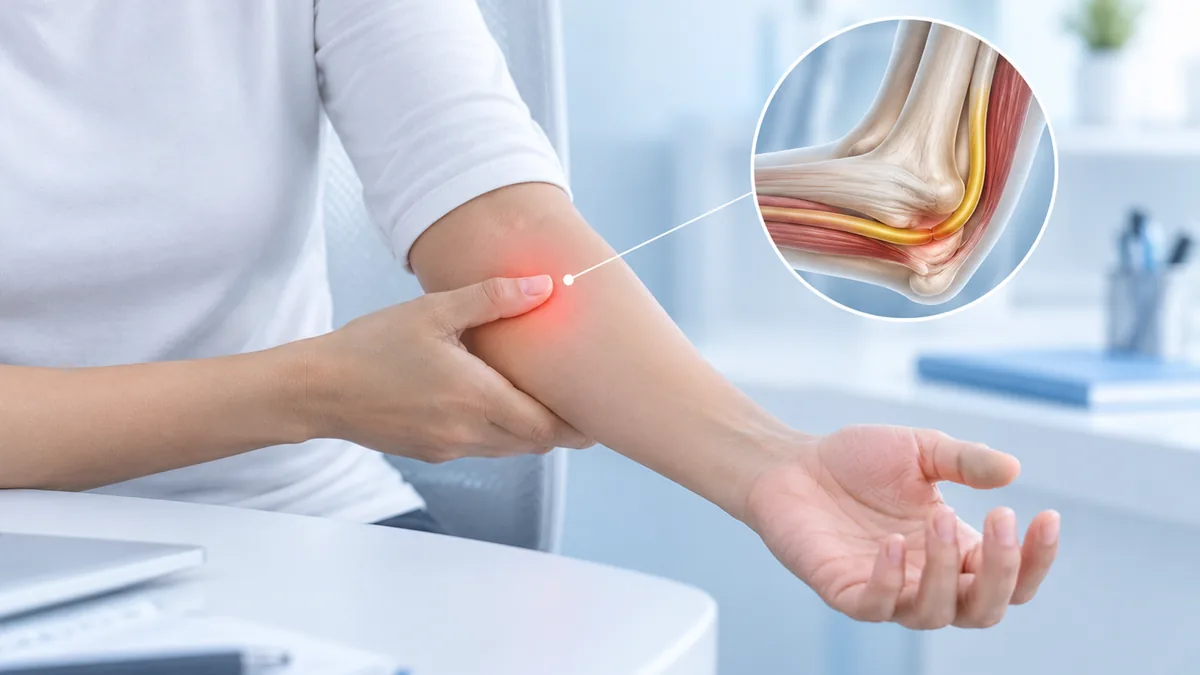
Cubital tunnel syndrome is pressure on the ulnar nerve at the inner side of the elbow. It causes tingling or numbness in the ring and little fingers, aching on the inner elbow and, later, a weak or clumsy hand. Symptoms are worse when the elbow stays bent. Most cases improve with a night splint, posture changes and physiotherapy.
Have you noticed tingling or numbness in your ring and little fingers, especially after your elbow has been bent for a while, on the phone or in bed? This could be cubital tunnel syndrome, a common condition caused by pressure on the ulnar nerve at the inner side of the elbow. It is the second most frequent trapped-nerve problem in the arm after carpal tunnel syndrome, and the two are often confused.
Early recognition and a few simple changes bring relief for most people. Here is what is happening, how to tell it apart from other causes of tingling fingers, and when to get it checked.
Key Takeaways
- Cubital tunnel syndrome is pressure on the ulnar nerve where it passes behind the inner elbow, the spot you feel when you knock your funny bone.
- The classic sign is tingling or numbness in the ring and little fingers, worse when the elbow is bent or resting on a hard surface. Carpal tunnel is different: it affects the thumb, index and middle fingers and comes from the wrist.
- Most people improve with a night splint, avoiding pressure on the elbow and physiotherapy. Surgery is kept for persistent symptoms or muscle weakness.
- Numbness lasting more than a few weeks, a weakening grip or thinning hand muscles need a doctor's assessment; long-standing pressure can cause permanent nerve damage.
What is cubital tunnel syndrome?
The ulnar nerve travels from the neck down the inner side of the arm and passes through a narrow space behind the inner elbow called the cubital tunnel. It is the funny bone nerve, the one you jolt when you knock the inner elbow. When this nerve is squeezed, stretched or irritated in the tunnel, the result is cubital tunnel syndrome, also called ulnar nerve entrapment at the elbow.
The ulnar nerve supplies feeling to the little finger and half of the ring finger. It also controls many of the small muscles in the hand that spread the fingers and give a firm grip. That is why symptoms show up in those two fingers first, and why hand weakness and clumsiness appear in longer-standing cases.
What are the symptoms of cubital tunnel syndrome?
Ulnar nerve compression symptoms usually develop gradually and may come and go at first:
- Numbness or tingling in the ring and little fingers
- A pins-and-needles feeling that worsens when the elbow is bent
- Pain or aching on the inner side of the elbow
- Weakness in the hand, making it harder to grip objects or do fine movements such as buttoning a shirt
- Clumsiness or a tendency to drop things
- In longer-standing cases, thinning (wasting) of the muscles in the hand
Many people first notice symptoms while talking on the phone, driving, resting the elbow on a desk or armrest, or on waking after sleeping with the arm curled up.
Cubital tunnel vs carpal tunnel: how to tell them apart
The two are easy to mix up; the fingers involved are the quickest clue.
| Feature | Cubital tunnel syndrome | Carpal tunnel syndrome |
|---|---|---|
| Nerve involved | Ulnar nerve | Median nerve |
| Where it is trapped | Inner side of the elbow | Front of the wrist |
| Fingers affected | Ring and little fingers | Thumb, index and middle fingers, and half of the ring finger |
| What makes it worse | Bending the elbow for long; leaning on the elbow | Gripping, bending the wrist, night-time; shaking the hand often eases it |
| Other clues | Ache on the inner elbow; weak grip; clumsy hand | Tingling that may travel up the forearm; weak thumb pinch |
Tingling fingers can also come from a pinched nerve in the neck, which is why your doctor examines the neck as well as the elbow; our post on herniated discs explains how a neck disc causes arm symptoms. Tennis elbow is different again: it affects tendons on the outer elbow and does not cause numbness.
What causes pressure on the ulnar nerve?
Several things can squeeze or stretch the ulnar nerve at the elbow:
- Keeping the elbow bent for long periods, for example while sleeping or holding a phone to your ear
- Leaning on the elbow repeatedly, especially on hard surfaces such as desks and car armrests
- A previous elbow fracture or dislocation that has changed the shape of the tunnel
- Arthritis or bone spurs around the elbow joint
- Swelling or fluid build-up in the elbow
- Repetitive activities that involve bending the elbow
- A direct blow to the inner elbow
Some people develop symptoms without an obvious single cause. People with diabetes may be more prone to nerve compression problems in general, including this one.
How is cubital tunnel syndrome diagnosed?
A doctor will usually begin with your story and an examination of the elbow, hand and neck. They may tap gently over the nerve or hold your elbow bent to see whether symptoms come on, and check the strength of the small hand muscles.
If the picture is unclear or surgery is being considered, tests help confirm where the nerve is being pressed:
- A nerve conduction study to measure how well signals travel along the ulnar nerve
- Electromyography (EMG), which checks how the hand muscles respond
- X-rays to look for bone changes or arthritis at the elbow
The nerve conduction study (NCV) with EMG is the key test: it can show whether the nerve is slowed at the elbow and helps rule out other conditions. A neurologist may be involved when the diagnosis is uncertain or the neck is a possible source.
What relieves cubital tunnel syndrome?
Most people improve with non-surgical care, especially when symptoms are mild or recent.
Non-surgical measures
- Avoid prolonged elbow bending and pressure on the inner elbow
- Wear a soft elbow splint at night, or a light brace, to keep the elbow straighter
- Use a padded elbow support during the day if you lean on it at work
- Short courses of anti-inflammatory medicine for discomfort, if your doctor agrees
- Nerve-gliding exercises and activity changes guided by a therapist
A physiotherapist experienced with nerve problems can teach nerve-gliding exercises, posture adjustments and ways to change everyday tasks so the nerve is irritated less. Steroid injections are not routinely used here: the evidence of benefit is limited and there is a small risk of irritating the nerve further.
When is surgery considered?
If symptoms persist despite a good trial of non-surgical care, or if there is clear muscle weakness or wasting, surgery may be recommended to take the pressure off the nerve. Common techniques include releasing the tight tissue over the nerve, moving the nerve to a less crowded position at the front of the elbow, or removing a small piece of bone that is rubbing on it. An orthopaedic surgeon will advise which suits your elbow.
What everyday habits help?
- Keep your elbows straighter when sleeping: wrap a towel loosely around the elbow or use a night splint
- Avoid resting your elbows on hard desks or car armrests for long periods; pad them if you must
- Take regular breaks from activities that keep the elbow bent
- Use a headset or speaker for long phone calls instead of holding the phone to your ear
- At the gym, avoid exercises that press on the inner elbow or force repeated deep elbow bends while symptoms are active
When should you see a doctor?
Mild tingling that comes and goes with an obvious trigger, such as a long phone call, often settles once you change the habit. See a doctor if it does not.
Get assessed if
- Numbness or tingling in the ring and little fingers lasts more than a few weeks
- Symptoms interfere with daily tasks
- Your grip is getting weaker or you keep dropping things
- You notice thinning of the muscles in the hand
- Symptoms began after an elbow injury
Long-standing pressure can cause permanent nerve damage, so book an appointment with an orthopaedic doctor rather than waiting for it to pass.
Cubital tunnel syndrome is very manageable when it is recognised early. For most people, protecting the elbow, a night splint and a few exercises are enough; surgery is there if symptoms persist or the hand weakens. If tingling or weakness is affecting your daily activities, get it assessed rather than waiting: nerves recover best when the pressure is relieved sooner.
Frequently Asked Questions
Is cubital tunnel syndrome the same as tennis elbow?
No. Tennis elbow affects the tendons on the outer side of the elbow and causes pain with gripping, but not numbness. Cubital tunnel syndrome involves the ulnar nerve on the inner side and causes tingling in the ring and little fingers.
Can cubital tunnel syndrome go away on its own?
Mild cases sometimes settle with rest and changes to elbow habits. Symptoms that persist beyond a few weeks usually need structured treatment.
Why are my symptoms worse at night?
Many people sleep with their elbows bent, which stretches and squeezes the ulnar nerve for hours at a time. A night splint or a loosely wrapped towel keeps the elbow straighter.
Can using a computer cause cubital tunnel syndrome?
Prolonged elbow bending or resting the elbows on a hard desk while working can contribute. Padding, a change of chair height and regular breaks help.
Is surgery always required?
No. Most people respond to non-surgical measures. Surgery is considered when a good trial of conservative care fails or muscle weakness develops.
How long does recovery take after surgery?
It varies. Many people notice better sensation within weeks, while full recovery of strength may take several months.
Does diabetes increase the risk?
People with diabetes may be more prone to nerve compression problems, including cubital tunnel syndrome.
Can the condition affect both arms?
Yes, although one side is usually more affected than the other.
What happens if cubital tunnel syndrome is left untreated?
Ongoing compression can lead to permanent nerve damage, muscle wasting and lasting weakness in the hand. That is why persistent symptoms deserve assessment.
Are steroid injections used for cubital tunnel syndrome?
Not routinely. Evidence of benefit is limited and there is a small risk of irritating the nerve, so splinting, activity changes and physiotherapy come first.
Tingling fingers or a weakening grip?
The orthopaedic team can examine the elbow, arrange a nerve conduction study if needed, and start treatment before the nerve is damaged.
Do not let a trapped nerve become a weak hand
Book an assessment with the orthopaedic team at Unittas Hospital. Trapped nerves recover best when the pressure is relieved early, and most people never need surgery.