


Quick Navigation
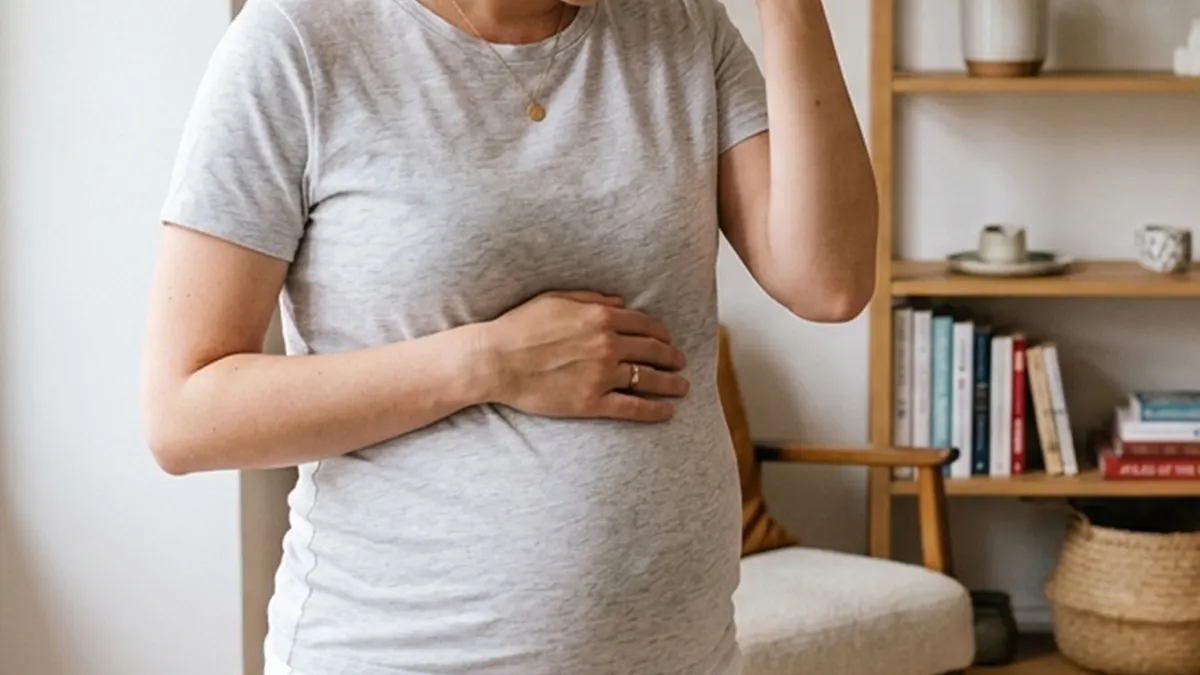
The second trimester is often called the "honeymoon phase" of pregnancy. However, upper abdominal pain during pregnancy can still occur and cause worry. Understanding the causes of abdominal pain in pregnancy helps you know when it's normal and when to seek help.
This article focuses on stomach pain in pregnancy during weeks 13 to 27, explaining typical reasons, warning signs, and safe ways to find relief.
Common Causes of Upper Stomach Pain in the Second Trimester
1. Growing Uterus & Fetal Pressure
The expanding uterus pushes upward on the stomach, ribs, and diaphragm, causing stretching or mild pain under the ribs.
Location: Under ribs, sides | Relief: Rest, warm compress, posture support
2. Heartburn & Acid Reflux
The uterus presses on the stomach, pushing acid upward and causing a burning sensation in the chest or upper abdomen.
Location: Upper chest/belly | Relief: Small meals, stay upright, elevate head
3. Gas, Bloating & Indigestion
Slower digestion traps gas, leading to sharp or cramping feelings in the upper belly.
Location: Upper/mid abdomen | Relief: Walk, fiber intake, hydration
4. Constipation
Hard stools and straining can contribute to overall abdominal discomfort that radiates upward.
Location: General abdomen | Relief: High-fiber diet, plenty of fluids
Less Common Causes
Gallstones, liver issues, or rare complications like preeclampsia can also cause upper abdominal pain. Most everyday pain stems from benign causes listed above.
Differentiating Normal Discomfort from Concerning Pain
Normal Upper Abdominal Pain
Mild, comes and goes, improves with rest, position changes, or eating small meals; no other alarming symptoms.
Concerning Signs
Severe, constant, or sharp pain; worsens over time; accompanied by vomiting, swelling, headache, vision changes, vaginal bleeding, or reduced fetal movement.
Safe Ways to Relieve Upper Stomach Pain
- Eat small, frequent meals instead of large ones
- Avoid spicy, fatty, acidic, or fried foods that trigger heartburn
- Stay upright for 30-60 minutes after eating and elevate your head while sleeping
- Drink plenty of water and include fiber-rich foods
- Practice good posture and use supportive pillows
- Try light walking or prenatal yoga
- Apply a warm (not hot) compress to the area
When to Seek Immediate Medical Attention
- Severe or unrelenting pain
- Pain with vaginal bleeding or spotting
- Sudden swelling in face/hands
- Severe headache or vision problems
- Reduced or no fetal movements
- Fever, chills, or persistent vomiting
Bottom Line
Mild upper abdominal pain during pregnancy is often part of normal changes, but staying informed helps you respond appropriately. At Unittas Hospital, our specialists provide personalized care throughout your pregnancy journey.
Planning your pregnancy care?
Unittas offers end-to-end pregnancy & maternity packages in Chennai.
Get Expert Care at Unittas Hospital
Our caring specialists are here to guide you through every step with safe, evidence-based care.